
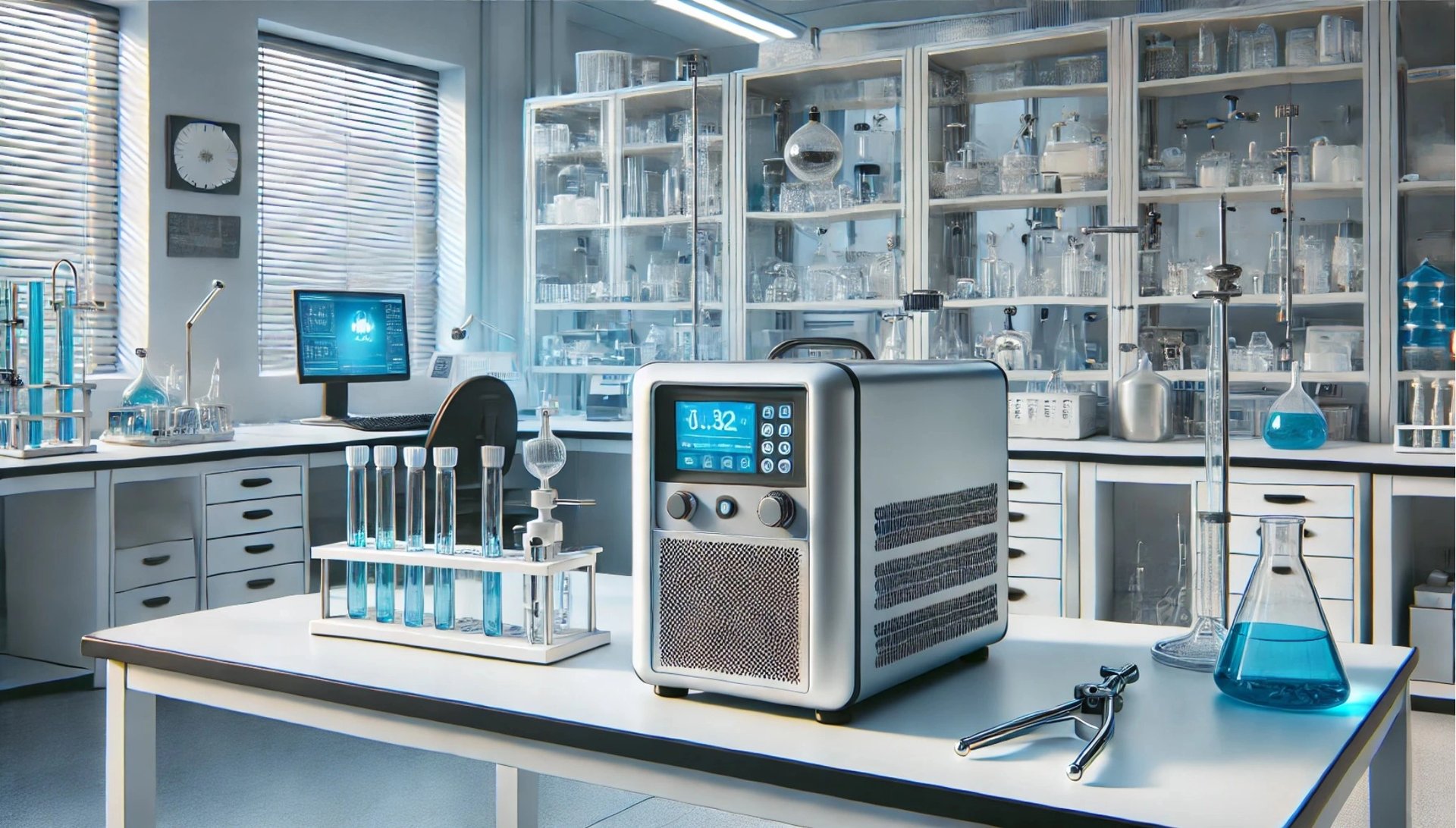
ON-SITE GAS GENERATOR
A gas generator for a laboratory is a device that produces high-purity gases like hydrogen, nitrogen, or zero air on-site as needed, eliminating the need for bulky and high-pressure gas cylinders. These generators improve lab safety, consistency, and efficiency by providing a continuous and reliable supply of gas for various applications such as gas chromatography (GC), mass spectrometry (MS), and chemical synthesis
Continuous Supply: One of the primary advantages of gas generators is their ability to provide a continuous supply of gas on-demand. Unlike traditional cylinders, which require regular monitoring and replacement when depleted, gas generators produce gas as needed, ensuring an uninterrupted workflow.
Cost-Effectiveness: While the initial investment in a gas generator may seem significant, it proves to be cost-effective in the long run. With cylinders, there are recurring costs associated with purchasing, handling, and storing replacements. Gas generators eliminate these expenses, offering a more economical solution over time.
Space Efficiency: Gas cylinders occupy substantial space for storage, posing logistical challenges, especially in constrained environments. Gas generators, on the other hand, are typically compact and can be installed within the workspace, maximizing available space and streamlining operations.
Safety: Gas cylinders come with inherent safety risks, including leakage, mishandling during transportation, and potential accidents in storage. Gas generators mitigate these risks by eliminating the need for handling pressurized cylinders, thereby enhancing workplace safety.
Customization and Flexibility: Gas generators allow for precise control over gas composition, enabling users to tailor gas mixtures according to specific requirements. This flexibility is invaluable in industries such as healthcare, laboratories, and manufacturing, where precise gas compositions are critical.
Environmental Sustainability: Traditional gas cylinders contribute to environmental pollution through transportation emissions, as well as the disposal of empty cylinders. Gas generators significantly reduce carbon footprint by minimizing transportation needs and producing gases onsite, aligning with sustainability goals.
Ease of Maintenance: Gas generators require minimal maintenance compared to the periodic inspections and replacements necessary for cylinders. Routine maintenance tasks for generators are typically straightforward and can be performed by trained personnel, ensuring operational efficiency with minimal downtime.
HART - TEKNOLOGI
Hart Teknologi 2026